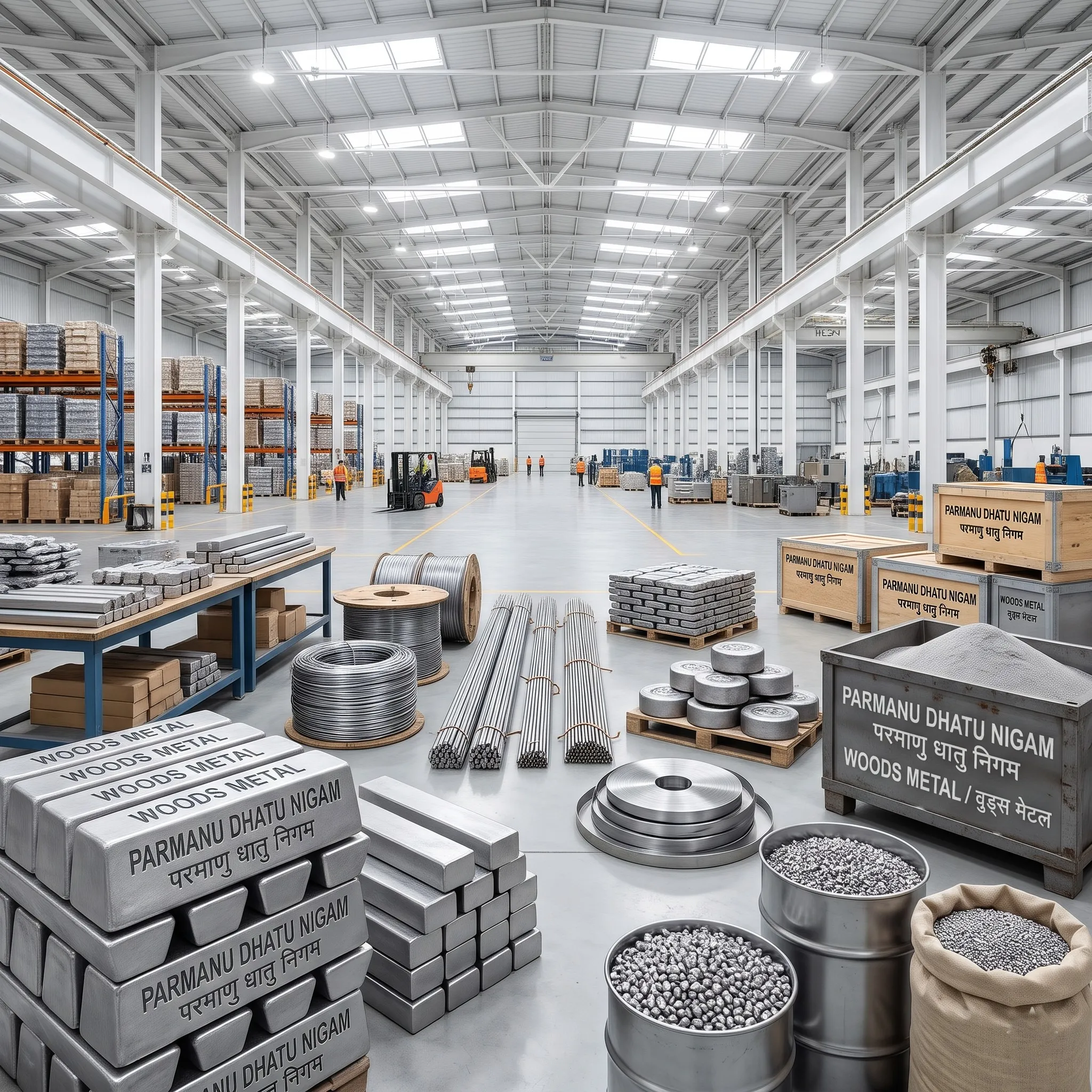
Woods Metal can soften, deform, or partially melt during Telangana’s hot-season storage and transport, while lead- and cadmium-bearing dust create hazards during cutting and heating. You will be able to set up a suitable storage area, verify incoming stock, control solid handling, and melt the alloy without relying on an assumed temperature.
Key takeaways
- Quarantine deliveries until identity, packaging, batch, and travel history are verified.
- Keep Woods Metal in closed, dry containers away from heat, moisture, and contaminants.
- Record batch identity through receiving, storage, cutting, and melting.
- Use dry tools and controlled heating to prevent splatter, dust, and contamination.
Check the alloy, packaging, and batch before it enters your shop
Quarantine every Woods Metal delivery until you verify its identity, condition, and travel history. A Telangana Woods Metal storage checklist begins at the receiving bay, not beside the furnace.
1. Match the invoice, purchase specification, label, and supplier SDS. Confirm the alloy composition, grade, batch or heat number, net weight, and whether the formulation contains lead and cadmium. Do not accept a cadmium-bearing grade as a cadmium-free alloy.
2. Inspect the outer packaging for distortion, softening, heat damage, broken seals, dampness, dust, and stains. A sun-heated vehicle body or summer transport can partially melt stock without making the alloy unusable.
3. Open the pack and examine sticks, ingots, pellets, or custom forms for fused pieces, unusual deformation, oxidation, dirt, and foreign material. Resolidified Woods Metal requires identity and cleanliness verification before it enters a controlled process.
4. Record photographs, package condition, batch number, received weight, vehicle details, and any temperature-logger reading from long transport. Isolate a mismatch, missing SDS, broken label, or suspected contamination; ask the supplier for written disposition before use.
Keep accepted stock closed, shaded, dry, and on shelving or pallets rather than concrete. For woods metal storage telangana, reject direct sunlight and locations beside roofs, boilers, furnaces, steam lines, or hot equipment. Even a cool-feeling warehouse can have local surfaces near the alloy’s roughly 70–75 °C melting range.
Set measurable storage controls for Telangana heat and humidity
Keep Woods Metal indoors in a shaded storage room, not beneath a sun-heated metal roof or beside a furnace, boiler, steam line, compressor, or hot process machine. A conventional formulation melts at about 70–75 °C, so a nearby hot surface can soften or melt stock even when the room feels acceptable.
The question of how to store Woods Metal in Telangana therefore starts with controlling local heat, not only average room temperature.
- Keep the storage area below 40 °C as an internal operating limit unless the supplier’s SDS or technical data sets a stricter limit. Install a temperature logger, set a high-temperature alarm, and log readings during Telangana’s hottest months.
- Keep relative humidity below 60% where practical, and prevent condensation on the alloy, containers, shelving, or vehicle cargo. Do not place stock against damp walls or on a floor that floods.
- Block direct sunlight with an opaque cover or shaded room. Keep containers away from vehicle bodies that have stood in the sun.
- Use closed, clean containers made from a packaging material confirmed compatible by the supplier. Keep sticks, ingots, pellets, and custom forms off dusty shelves and protect them from abrasive contact.
- Maintain ordinary room ventilation, but do not use fans that spread contaminated dust. Segregate the stock from food, medicines, drinking-water equipment, clean packaging, acids, and general scrap.
These are practical low melting alloy storage conditions, not a universal legal temperature standard. Confirm the permitted temperature, humidity, packaging compatibility, and transport limits against the alloy’s SDS and certificate. Clean spills with a method approved for lead- and cadmium-bearing residues; never wash dust into a drain.
Use closed containers and a stock register that preserves identity
Use the original sealed pack where possible; otherwise place sticks, ingots, pellets, or custom forms in a clean, lidded HDPE or polypropylene container approved by the supplier’s SDS. Keep it indoors, shaded, dry, and away from roofs, furnaces, steam lines, boiler rooms, and sun-heated vehicle bodies.
A practical woods metal storage telangana setup uses a temperature logger during summer and transport; keep stock comfortably below its 70–75 °C melting range and investigate any softened, deformed, or wet pack.
- Label every container with “Woods Metal,” supplier, alloy designation, batch or lot number, received date, net mass, and the SDS revision. Add “contains lead and cadmium” and “keep closed.”
- Record each receipt, container opening, quantity issued, balance, user, work order, and returned or rejected quantity. Preserve the original batch identity when combining pieces; do not mix unidentified remnants with saleable stock.
- Use first-in, first-out rotation. Mark opened packs with the opening date, inspect seals and surfaces before issue, and quarantine any container with missing identity, corrosion, contamination, or unexplained weight loss.
Container optionWhat it meansWhen it appliesOriginal sealed packagingBest identity and contamination controlUnopened stockLidded HDPE or polypropyleneClean, closed secondary containerLoose solid pieces after compatibility confirmationGasketed metal containerRobust transport and storageOnly when the supplier’s SDS confirms compatibility; keep labelled
Segregate stock from food, medicines, drinking-water equipment, and clean packaging materials. Keep dust, filings, contaminated absorbents, and rejected alloy in separate closed, labelled containers.
Handle solid pieces without creating dust, sharp edges, or contamination
Lift Woods Metal solid pieces with both hands or a suitable tray, not by gripping a single projecting edge. Wear chemical-resistant protective gloves and eye protection; gloves protect your hands, but they do not prevent lead- or cadmium-contaminated dust transferring to handles, phones, vehicles, or food.
Use this woods metal handling guide at the workbench:
- Cut sticks or ingots with a guarded saw or shear that captures chips at the source. Avoid grinding and abrasive finishing, which create finer inhalable dust. Secure the piece before cutting so it cannot roll, slip, or fracture.
- Weigh stock inside a dedicated, clean tray on a balance. Do not place alloy directly on a food, laboratory, or packaging surface, and return the weighed piece to its labelled container immediately.
- Transfer pieces in a lidded, labelled tray or container. Do not carry loose fragments through clean areas, offices, vehicles, or eating spaces.
- Position the stock on a stable, uncluttered bench with the cut face supported and sharp corners turned away from people. Keep chips, rejected pieces, and contaminated absorbents in a closed labelled waste container.
Clean residue with a suitable industrial vacuum with appropriate filtration or a compatible wet method. Never use compressed air or dry sweeping; both can disperse lead- or cadmium-bearing dust. Wash your hands before eating or drinking, and keep contaminated clothing out of food and office areas.
Heat and melt Woods Metal with controlled equipment and dry tools
Use a thermostatically controlled electric melting pot or hot plate with a suitable crucible, temperature indicator, and local exhaust ventilation at the melting point. Do not use a torch or open flame: a 70–75 °C alloy can still develop hot spots and metal-containing fumes from lead and cadmium.
1. Obtain the supplier’s certificate and SDS before choosing a setpoint. Confirm the exact formulation, melting range, recommended processing temperature, maximum permitted temperature, hold time, ventilation controls, and limits for reheating; “Woods Metal” can describe modified formulations.
2. Place the crucible on stable, heat-resistant equipment and heat gradually under source capture. Keep your face and hands out of the fume path, and stop the operation if the temperature controller or indicator fails.
3. Dry the ladle, moulds, tools, inserts, and crucible completely. Water or damp material contacting molten alloy can flash to steam and eject hot metal, even at this low melting temperature.
4. Keep the melt covered where the process allows, avoid prolonged holding, and never add wet feedstock. Do not use water to cool or extinguish a molten-alloy spill; follow the site’s metal-spill procedure.
5. Record the alloy batch, equipment, setpoint, actual melt temperature, and hold time. Keep the low melting alloy storage conditions below the melting range, shaded, dry, and away from roofs, furnaces, steam lines, and sun-heated vehicles; use a temperature logger in hot Telangana storage areas.
PARMANU DHATU NIGAM can provide the batch documentation you need to distinguish a specified formulation from generic Woods Metal before processing.
Frequently asked questions
- What should you check before Woods Metal enters a Telangana fabrication shop?
- Quarantine the delivery and verify the alloy identity, packaging condition, batch number, labels, quantity, and travel history before acceptance.
- How should you store Woods Metal in Telangana heat and humidity?
- Set measurable controls for temperature, humidity, moisture exposure, container condition, and proximity to heat sources, then record inspections.
- Why use closed containers and a stock register for Woods Metal?
- Closed containers limit moisture, dust, and cross-contamination, while a stock register preserves batch identity from receipt through use.
- How do you handle and melt Woods Metal safely?
- Handle solid pieces to avoid dust and sharp edges, keep tools dry, and use controlled heating equipment rather than uncontrolled direct heating.
Keywords